| Reading time: 3 minutes |
Is this book for you?
Let’s first go over a few expectations to make sure we’re on the same page.
Requirements
- You want to learn Japanese home cooking.1
- You’re willing to go shopping once every ~2 weeks.2
- You’re willing to cook twice a week for ~30 minutes per session.3
- You’re willing to spend a nominal amount on tools and ingredients.4
- You’re not afraid to fail.5
For best results
- You live in Japan but didn’t grow up here.6
- You prefer to follow a loose curriculum created by experts over forging your own learning path.7
- You live alone or with a partner.8
Non-requirements
Is this book free?
- Yes, during the early access period, this book is completely free.
- In the future, advanced modules will require a nominal subscription fee.
About Japanese home cooking
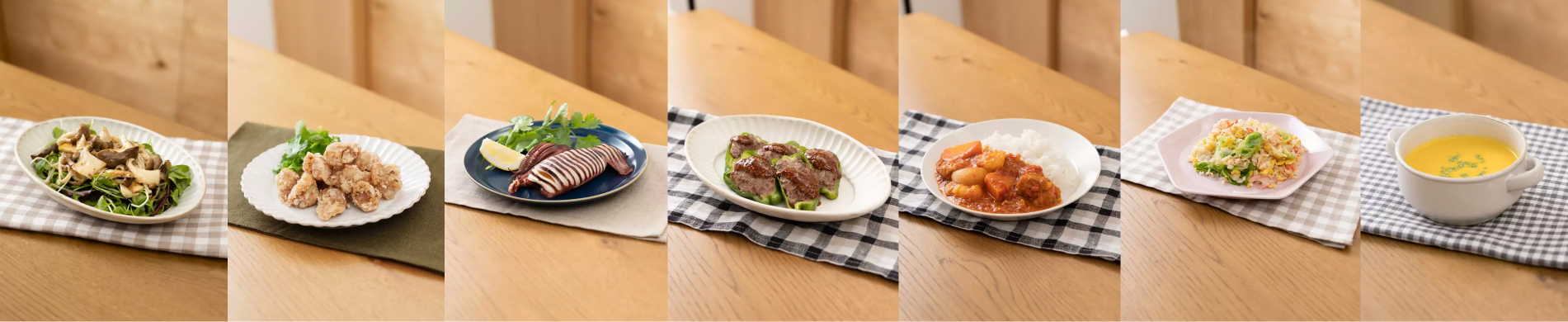
What is it?
Japanese home cooking is practical, everyday meals, created with fresh ingredients found easily nearby.
It’s simple meals you can throw together on a busy night or take your time with on a lazy weekend afternoon.
It leaves room for improvisation. It’s a set of core seasonings that become second-nature to cook with. It’s dishes that highlight the natural flavor of a fresh vegetable.
It’s different from the broader (and more internationally famous) Japanese cuisine. Most Japanese households are not rolling sushi (makizushi 巻き寿司) on a casual Tuesday night. Most Japanese households do not have a 30 liter stock pot full of pork bones simmering on the stove all day and night to make a late-night bowl of ramen.
Why learn it?
Japanese home cooking is:
- Delicious
- Relatively cheap
- Relatively quick
- Amenable to improvisation
- Healthy
Don’t get us wrong: the quality and variety of restuarants in Japan is one of the best parts of living here. But once you discover the pleasure of cooking at home, the difference between the two will enhance your experience of both.
Why learn it from this book?
There are many aggressively boring daily tasks we learn by osmosis growing up, from our parents, schools, and by simply exploring the world. A surprising number of these skills must be relearned from scratch when immigrating to a new country.
We believe cooking is an innately virtuous pursuit, both utilitiarian and – with the right training – pleasurable in itself. However, learning to find enjoyment in cooking has prerequisites outside the kitchen, and the hurdle of relearning the prerequisites of shopping and finding the right tools can present a barrier (not to mention the cost of bootstrapping).
We’re creating this book to help you overcome the frustrating parts of preparing to cook, so that you can skip straight to the fun parts of cooking. Then, we’ll teach you module-by-module how to build fundamental cooking skills that will not only allow you to survive in the kitchen, but become a creative force in the kitchen, unbounded by recipes.
Future you
After reading cooking your way through this book, you’ll be capable of the following:
- You’ll have quality tools you use every cooking session, and the startup cost will be less than one Uber Eats delivery.
- You’ll know how to navigate a Japanese supermarket, which stores to go to, how to find the right ingredients and seasonings, how to read labels, how much to buy, when to buy, and how to keep ingredients fresh.
- You’ll know basic cooking skills, learning them gradually as they’re needed.
- You’ll internalize recipe templates that will allow you to improvise thousands of combinations of ingredients, seasonings, and cooking methods directly from the ingredients in your pantry without consulting a recipe book, Google, or measuring.
- You’ll know how to sample from a Japanese recipe to level up your cooking independently according to your tastes.
- You’ll develop healthy eating habits using fresh ingredients, without compromising on taste.
- You’ll save thousands of yen every month compared to ordering delivery.
- You’ll know enough Japanese to comfortably browse grocery stores and generic recipes.
We’ll define “Japanese home cooking” in the next section, but briefly, it’s “meals that are commonly cooked in households in Japan using commonly available ingredients”.↩︎
As a cooking enthusiast shopping can be fun, but at the start we’ll treat it as a chore and try to minimize it while still ensuring your ingredients taste good.↩︎
Of course the total time will depend on the module. The goal is to gradually introduce cooking into your currently lifestyle in a way that is at first tolerable but soon is enjoyable and overwhelmingly beneficial.↩︎
We want to make the economics of learning to cook as palatable as we can. You won’t need to buy everything at once, and we’ll include recommendations for both the cheapest and best investment tools.↩︎
The common adage that you must fail to learn is absolutely true with cooking. Expect your creations to be inedible from time-to-time, keep a positive attitude, and don’t beat yourself up about it.↩︎
If you live outside of Japan, following the curriculum will take more effort. Much of this book is dedicated to helping navigate the parts of cooking which happen outside the kitchen. For example, you may still be able to find the proper ingredients in an Asian grocery store in America, but it could be easier (English labels?) or harder (only one questionable brand to choose from).↩︎
There are lots of ways to learn to cook. This book is opinionated in that we want to save you from the frustrating and expensive trial and error (finding good tools and accurate resources) so you can do the fun trial and error (experimenting in the kitchen with your favorite ingredients).↩︎
Cooking for others increases the cost of failure. When you’re first starting out, it’s best to keep the stakes low. If a meal doesn’t go right, your family of four shouldn’t be in danger of going to bed hungry.↩︎
Never cooked before, even in your home country? No problem. If you’re well-versed cooking in your home country, you’ll find you already know some of this book’s contents. Our intention is that you can skip or skim the portions you already know. But don’t be too hasty! There might be a few helpful tidbits in there for you, especially if you’re not familiar with the differences between ingredients found in Japan and your home country.↩︎
Can’t read a package label? Someone with only textbook kanji knowledge might not be able to either.↩︎
The cooking in this book will only supplement your current diet at first. Making a full meal will be our first big goal on the horizon.↩︎